
Team and leadership tools in project management represent the most human-centered dimension of PMBOK 8, recognizing that no planning system, risk model, or schedule algorithm delivers projects — motivated, skilled, and well-led teams do.
Projects are ultimately delivered by people. No matter how sophisticated the schedule, how detailed the risk register, or how precise the budget, it is the team — their skills, motivation, communication, and collaboration — that determines whether a project succeeds or fails. Recognizing this reality, PMBOK 8 places significant emphasis on team and leadership tools as core competencies for project managers.
In this guide you will find:
- Leadership
- Interpersonal and Team Skills
- Individual and Team Assessments
- Emotional Intelligence
- Ground Rules
- Recognition and Rewards
- Tuckman Ladder
- Organizational Theory
- Organizational Cultural Intelligence
- Pre-assignment
- Green Human Resource Management
- Resource-based View
1. Leadership
Leadership is the ability to guide, inspire, and influence others toward achieving a shared goal. In project management, leadership goes beyond authority or title — it encompasses vision-setting, decision-making under uncertainty, conflict resolution, and the ability to bring out the best in each team member. PMBOK 8 positions leadership as a foundational competency that permeates every performance domain, from stakeholder engagement to delivery and measurement.
Effective project leaders adapt their style to the situation and the individual. Directive leadership may be appropriate when onboarding a junior team member or when a crisis requires fast decisions. Servant leadership — where the manager focuses on removing obstacles and enabling the team — is often more effective in self-organizing agile environments. Transformational leadership inspires intrinsic motivation by connecting work to a higher purpose.
In practice, project managers exercise leadership through daily stand-ups and retrospectives, one-on-one coaching conversations, escalation management, and stakeholder communication. They model the behaviors they expect from the team: accountability, transparency, and continuous improvement.
Strong leadership produces higher team engagement, lower turnover, faster problem resolution, and improved stakeholder satisfaction. Leadership becomes a liability when it turns autocratic, stifling innovation, or when it is too passive, leaving teams without direction in ambiguous situations.
PMBOK 8 explicitly recognizes that project managers spend a large portion of their time on leadership activities rather than purely technical tasks. The framework encourages practitioners to invest continuously in their own leadership development as a professional practice, not a one-time training event.
2. Interpersonal and Team Skills
Interpersonal and team skills form the social fabric of project execution. This broad category encompasses active listening, communication, negotiation, conflict management, facilitation, influencing, and team building — the everyday micro-behaviors that determine whether a team functions as a cohesive unit or a fragmented collection of individuals.
Active listening means giving full attention to the speaker, asking clarifying questions, and reflecting back what was heard before responding. In high-pressure projects, the temptation is to interrupt or mentally prepare a rebuttal instead of listening. Practicing active listening prevents misunderstandings that can derail deliverables weeks later.
Facilitation is the art of guiding a group through a structured process — a workshop, a retrospective, a risk identification session — in a way that draws out contributions from everyone and produces actionable outcomes. Skilled facilitators remain neutral, manage dominant voices, and ensure quieter team members are heard.
Influencing without authority is particularly relevant when the project manager must coordinate resources they do not directly manage — a common situation in matrix organizations. This requires building credibility through demonstrated expertise, establishing rapport, and framing requests in terms of shared interests.
Conflict management is one of the most critical interpersonal skills. The goal is not to eliminate conflict (which is often a sign of healthy debate) but to channel it constructively and prevent it from escalating into interpersonal hostility. PMBOK 8 treats these skills as essential tools to be deliberately applied, not soft add-ons left to chance.
3. Individual and Team Assessments
Individual and team assessments are structured tools used to understand the capabilities, preferences, working styles, and potential gaps within a project team. These assessments provide objective data to inform team formation decisions, role assignments, development plans, and communication strategies.
Common individual assessment instruments include personality profiles such as Myers-Briggs Type Indicator (MBTI), DISC, and the Big Five personality model. These tools reveal how people prefer to receive information, make decisions, and interact with others. Knowing that one team member is highly analytical and detail-oriented while another is a big-picture thinker helps the project manager structure collaboration and assign responsibilities more effectively.
Skills inventories and competency matrices provide a functional view of what the team can do versus what the project requires. Gaps identified early can be addressed through training, hiring, or strategic partnering before they become critical-path risks.
Team-level assessments evaluate group dynamics, communication health, and psychological safety. Tools like the Team Effectiveness Survey or Lencioni’s Five Dysfunctions model help diagnose whether the team has sufficient trust, productive conflict norms, commitment, accountability, and focus on results.
PMBOK 8 recommends conducting assessments at project initiation and revisiting them after major team changes or phase transitions. Assessment data should be handled with discretion and used to support individuals, never to label or limit them.
4. Emotional Intelligence
Emotional Intelligence (EI) refers to the ability to recognize, understand, manage, and effectively use emotions — both one’s own and those of others. Popularized by psychologist Daniel Goleman, EI is now considered a critical competency for project managers, often more predictive of leadership success than technical expertise or IQ.
Goleman’s model identifies five components: self-awareness (knowing your emotional state and its impact), self-regulation (managing disruptive impulses and maintaining composure under stress), motivation (being driven by intrinsic goals rather than external rewards), empathy (understanding others’ emotions and perspectives), and social skills (managing relationships and building networks).
In project management, high EI manifests in practical ways. A self-aware project manager recognizes when stress is affecting their judgment and pauses before reacting. An empathetic manager notices when a team member is struggling and intervenes with support rather than pressure. A manager with strong social skills navigates organizational politics and stakeholder relationships with finesse.
PMBOK 8 integrates emotional intelligence into its discussion of leadership and team performance, acknowledging that project environments are emotionally charged — deadlines, resource conflicts, scope changes, and stakeholder demands all create pressure that can erode team morale if not managed skillfully.
Research consistently shows that teams led by emotionally intelligent managers have higher engagement, lower absenteeism, and better performance outcomes. The good news is that EI is not fixed; it can be developed through coaching, reflection, feedback, and deliberate practice.
5. Ground Rules
Ground rules are explicit, team-agreed norms that define how team members will work together. They establish expectations for communication, decision-making, meeting behavior, conflict resolution, and professional conduct. By making implicit expectations explicit, ground rules reduce friction and create a foundation of psychological safety.
Ground rules are most effective when co-created by the team rather than imposed by the project manager. The process of discussing and agreeing on norms is itself a team-building activity that surfaces assumptions, values, and preferences. Common topics include: how decisions will be made (consensus vs. majority vote), how disagreements will be handled, expected response times for messages, and meeting etiquette.
In agile environments, ground rules are often captured in a “Working Agreement” or “Team Charter” document that is displayed prominently and revisited in retrospectives. In traditional project settings, they may be documented in the team management plan.
PMBOK 8 positions ground rules as an essential tool during team development, particularly during the early stages when norms are being formed. Establishing clear expectations early prevents the development of dysfunctional patterns that are much harder to change later. Best practice is to revisit ground rules at phase transitions or when new team members join.
6. Recognition and Rewards
Recognition and rewards are tools for reinforcing desired behaviors and contributions within a project team. They operate on the well-established behavioral principle that actions followed by positive outcomes are more likely to be repeated. When applied thoughtfully, recognition and rewards boost morale, strengthen team cohesion, and signal what the organization values.
Recognition refers to the acknowledgment of effort, behavior, or achievement — often informal and immediate. A public “thank you” in a team meeting, a handwritten note, or a shout-out in a project newsletter can have a profound impact on motivation. Rewards are more formal and often tied to tangible outcomes: bonuses, gift cards, additional time off, or professional development opportunities.
PMBOK 8 emphasizes that recognition and reward systems must be aligned with project objectives and team values. Rewarding individual performance in a collaborative environment can undermine teamwork; rewarding team achievements reinforces collective accountability.
Cultural sensitivity is critical. In some cultures, public recognition is highly motivating; in others, it may cause embarrassment. Project managers leading multicultural teams must understand these differences and tailor their approach accordingly. The timing of recognition matters enormously — immediate recognition, given as close to the behavior as possible, is far more powerful than annual performance reviews.
7. Tuckman Ladder
The Tuckman Ladder, developed by psychologist Bruce Tuckman in 1965 (and extended with a fifth stage by Mary Ann Jensen in 1977), is a model describing the stages of team development. It remains one of the most widely used frameworks in project management for understanding how teams evolve over time.
The five stages are: Forming — team members meet, roles are unclear, and individuals are polite but cautious; Storming — conflicts emerge as personalities clash and competition for roles surfaces; Norming — the team establishes working agreements and trust grows; Performing — the team operates at high efficiency with strong trust and clear roles; and Adjourning — the team disbands at project completion with attention to lessons learned and emotional closure.
The value of the Tuckman Ladder for project managers is diagnostic and prescriptive. When a team is in the Storming stage, the appropriate response is not to suppress conflict but to facilitate healthy debate, clarify roles, and reinforce ground rules. Trying to skip Storming by avoiding conflict typically leads to “fake norming” — surface harmony masking unresolved tensions that resurface at the worst moment.
PMBOK 8 references the Tuckman model as a useful lens for managing team dynamics across the project lifecycle. New team members, scope changes, or major setbacks can push a team back to earlier stages, requiring active intervention by the project manager.
8. Organizational Theory
Organizational theory encompasses a body of knowledge about how organizations function, how people behave within them, and how structures, processes, and culture shape performance. For project managers, understanding organizational theory is essential for navigating the political, structural, and human dimensions of project environments.
Key concepts include organizational structures (functional, matrix, projectized, hybrid), which determine how authority, resources, and communication flow. A project manager operating in a weak matrix has limited authority and must rely heavily on influence skills; one in a projectized organization has direct control but must manage organizational silos.
Motivation theories — Maslow’s Hierarchy of Needs, Herzberg’s Two-Factor Theory, McGregor’s Theory X and Y, and Vroom’s Expectancy Theory — provide frameworks for understanding what drives human behavior at work. These theories inform how project managers design reward systems, delegate tasks, and create an environment where people want to perform, not just comply.
PMBOK 8 draws on organizational theory throughout its performance domains, particularly in the Team and Stakeholder domains. Understanding how organizations really work — as opposed to how org charts suggest they work — is a practical competitive advantage for project managers.
9. Organizational Cultural Intelligence
Organizational Cultural Intelligence (OCI) refers to the ability to recognize, interpret, and adapt to the cultural norms, values, and behavioral expectations of different organizations and national cultures. In an increasingly globalized project landscape — where virtual teams span continents and projects involve multinational stakeholders — cultural intelligence is a critical leadership competency.
Cultural intelligence has four components: cognitive (knowledge of cultural norms and practices), metacognitive (awareness of how your own cultural assumptions shape your perceptions), motivational (the drive to engage with cultural differences), and behavioral (the ability to adapt communication and interaction style to different cultural contexts).
In practice, OCI affects how project managers conduct meetings, negotiate contracts, give feedback, and resolve conflicts. In high-context cultures (common in parts of Asia, Latin America, and the Middle East), communication is indirect and meaning is embedded in context and relationship. In low-context cultures (common in the US, Germany, and Scandinavia), directness and explicit communication are valued.
PMBOK 8 recognizes cultural dimensions as a key environmental factor influencing project outcomes and encourages project managers to invest in cultural awareness as part of their professional development, particularly when working on international or multicultural projects.
10. Pre-assignment
Pre-assignment refers to the practice of identifying and committing specific team members to a project before the formal project planning phase begins. This can occur for a variety of reasons: a key expert is required by the project charter or contract, a team member’s participation was promised to secure a client, or a critical skill is so scarce that early reservation is necessary to ensure availability.
Pre-assignment has significant advantages: it provides certainty about resource availability from the outset, enables early team engagement in planning (which improves buy-in and plan quality), and reduces the risk of resource contention later in the project lifecycle. When a subject matter expert is involved from the beginning, requirements are better defined and technical risks are identified earlier.
However, pre-assignment carries risks. The pre-assigned individual may not be the best fit for the actual role once project scope is clarified. Pre-assigned resources may have competing commitments that were not fully disclosed at the time of commitment.
PMBOK 8 addresses pre-assignment within the context of resource acquisition, emphasizing the importance of confirming availability, clarifying role expectations, and documenting agreements formally — even when the assignment is made informally or verbally. In agile environments, pre-assignment of dedicated team members is often preferred over shared resources, as it reduces context-switching costs and improves team cohesion and velocity.
11. Green Human Resource Management
Green Human Resource Management (Green HRM) refers to the integration of environmental sustainability principles into HR practices, including recruitment, training, performance management, and organizational culture. Within the context of project management, Green HRM means aligning how project teams are organized, motivated, and managed with broader environmental and sustainability objectives.
Practically, Green HRM in projects can take many forms: recruiting team members with sustainability competencies, including green performance metrics in individual and team evaluations, providing training on environmental impact of project decisions, and fostering a team culture where sustainable practices are normalized and celebrated.
PMBOK 8 reflects a broader industry trend toward sustainable project management, recognizing that projects exist within a social and environmental context, not just a business one. The framework’s expanded treatment of stakeholder value explicitly includes environmental and societal stakeholders alongside traditional business sponsors.
Green HRM is increasingly relevant as organizations face regulatory pressure, investor scrutiny, and talent market dynamics driven by sustainability expectations. Younger professionals in particular often prioritize employers and projects whose values align with environmental responsibility. Practical implementation challenges include measuring green performance objectively and avoiding “greenwashing” — symbolic gestures without substantive change.
12. Resource-based View
The Resource-based View (RBV) is a strategic management theory positing that competitive advantage derives from the unique, valuable, rare, and inimitable resources and capabilities an organization possesses. Introduced by Birger Wernerfelt in 1984 and developed by Jay Barney, RBV shifted strategic thinking from external market analysis toward an internal focus on organizational capabilities.
In project management, the RBV lens helps project managers and organizations understand why certain teams consistently outperform others. The answer often lies not in tools or processes but in human capital — the tacit knowledge, collaborative culture, and specialized expertise that cannot be easily replicated by competitors or outsourced providers.
Applying RBV thinking to project team management means identifying the knowledge, skills, and relational assets that are truly distinctive and protecting them through retention strategies, knowledge management practices, and succession planning. A project team that has developed deep domain expertise and high trust over multiple project cycles represents a strategic resource worth investing in.
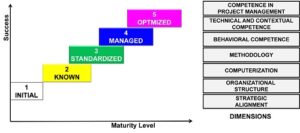
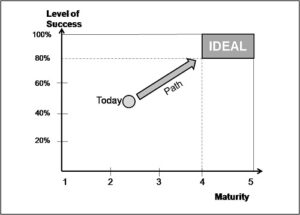
PMBOK 8’s emphasis on value delivery and organizational capability building is philosophically aligned with the RBV perspective. The framework recognizes that project management maturity — the organizational capability to consistently deliver value through projects — is itself a strategic resource developed over time through learning, reflection, and deliberate practice.
The practical implication for project managers is to think beyond the current project and consider how team experiences, lessons learned, and capability development contribute to long-term organizational competitive advantage.
Conclusion
The twelve team and leadership tools explored in this guide represent the human dimension of project management excellence. From the foundational principles of leadership and emotional intelligence to the structural insights of organizational theory and the strategic lens of the resource-based view, these tools collectively address the most complex and consequential challenge in project delivery: getting people to work together effectively toward a shared goal.
No project management methodology — however well-designed — delivers value on its own. It is the project team, shaped by skilled leadership, clear norms, cultural intelligence, and genuine recognition, that transforms plans into outcomes. PMBOK 8’s expanded emphasis on these human-centered tools reflects a mature understanding that technical proficiency is necessary but not sufficient for project success.
For a complete overview of the PMBOK 8 framework, see the PMBOK 8 Complete Guide.
Call to Action:
References
PMBOK Guide 8: The New Era of Value-Based Project Management. Available at: https://projectmanagement.com.br/pmbok-guide-8/
Disclaimer
This article is an independent educational interpretation of the PMBOK® Guide – Eighth Edition, developed for informational purposes by ProjectManagement.com.br. It does not reproduce or redistribute proprietary PMI content. All trademarks, including PMI, PMBOK, and Project Management Institute, are the property of the Project Management Institute, Inc. For access to the complete and official content, purchase the guide from Amazon or download it for free at https://www.pmi.org/standards/pmbok if you are a PMI member.
Free PMBOK 8 Quick Reference Card
All 7 Performance Domains, 6 Principles, and key tools on one printable page. Download it free — no payment required.
Team and Leadership Tools in Project Management: Key Takeaways
PMBOK 8’s team and leadership tools in project management include active listening, conflict management, emotional intelligence, coaching, mentoring, servant leadership, and motivation techniques — each addressing a different aspect of building and sustaining high-performing project teams.
Applying team and leadership tools in project management requires situational judgment: the approach that resolves one conflict may escalate another, making self-awareness and stakeholder understanding essential complements to any specific technique or framework.
As hybrid and remote work become the norm, team and leadership tools in project management are evolving: virtual facilitation, asynchronous communication norms, inclusive meeting practices, and digital collaboration platforms now form core elements of the effective project leader’s toolkit.
QUIZ
Want to test what you learned from this article?
One multiple-choice question + one practical reflection. Earn Project Together points!
MULTIPLE CHOICE
According to the article, why are team and leadership tools only as good as the TRUST between the people using them?
REFLECTION
To share your reflection, enter your name and email:
You will earn points in the Project Together community!
Your data is protected. No spam.
PRACTICAL REFLECTION
Which part of this article do you plan to apply to generate more value in your projects or daily work?
Your reflection helps other professionals apply the content. Shared reflections are visible below.
✓
PROJECT TOGETHER
Earn points by answering quizzes and sharing reflections. Climb the ranking and earn your certificate!
Join the Course →
 Project Management