
This guide covers everything you need to know about the final product/service/result transition in PMBOK 8. This output formalizes the handover of the project’s deliverables from the project team to the operations, maintenance, or end-user organization — ensuring that what was built is successfully transferred and sustained beyond the project’s close.
What Is the Final Product/Service/Result Transition?
The final product/service/result transition is the formal handover process and documentation that confirms the project’s outputs have been transferred to the appropriate receiving organization, team, or individual. It ensures that the organization is ready to operate, maintain, and support the deliverable after the project team disbands.
A transition is not simply a delivery — it includes transferring knowledge, documentation, access credentials, operational procedures, training, support contacts, and any ongoing obligations. Without a formal transition, projects “land” without infrastructure: the website goes live but no one knows how to update it, or the software is deployed but the operations team has no runbook.
The transition document records what was handed over, to whom, when, under what conditions, and what support commitments were made by the project team during the post-launch stabilization period.
Final Product/Service/Result Transition in PMBOK 8 — Domain and Process
In the PMBOK Guide 8th Edition, the final product/service/result transition belongs to the Governance Performance Domain and is produced during the Close Project or Phase process. PMBOK 8 treats the transition as a structured activity, not an afterthought, recognizing that a poorly executed transition destroys value regardless of how well the project was executed.
The transition output feeds into the final report and the lessons learned register. It also triggers administrative closure activities, including releasing project resources, closing procurement contracts, and archiving project documents.
Key Elements of the Final Product/Service/Result Transition
A well-structured transition document typically includes:
- Deliverable Description — what is being transitioned, including version, configuration, and technical specifications
- Receiving Party — the team, department, or individual accepting responsibility for the deliverable
- Handover Items — all assets transferred: documentation, credentials, source code, equipment, training materials
- Training Completed — record of knowledge transfer sessions conducted for the receiving team
- Support Period — any post-launch support commitments made by the project team
- Formal Acceptance — signature from the receiving party confirming successful handover
Final Product/Service/Result Transition Example — Project Phoenix
The Project Phoenix transition was completed on May 10, 2024, when Alex Morgan formally handed over the launched website to TechCorp’s IT Operations team, led by David Kim. The handover package included the complete source code repository (GitHub), hosting dashboard credentials for CloudHost Pro, DNS management access, the Google Analytics account, all design source files from BrightFrame, the content management system training guide, and a 30-day post-launch support commitment covering critical bug fixes.
Alex conducted a two-hour handover session with David Kim and two members of the operations team, walking through the CMS, the deployment pipeline, and the monitoring dashboards. David signed the transition acceptance form on May 10, confirming that all handover items were received and the team was prepared to operate the site independently. The transition was completed on schedule, and the project officially closed on May 15, 2024 — three weeks before the original baseline end date.
You can download the complete filled-in example below — it shows exactly how the final transition was documented in a real project context.
Frequently Asked Questions
What is the final product, service, or result transition in PMBOK 8?
It is the formal handover of the project’s deliverables to the operations, maintenance, or end-user organization so what was built is sustained beyond the project.
Which process produces it?
It is produced during Close Project or Phase, within the Governance Performance Domain.
Why is a formal transition important?
Without a planned handover, deliverables can fail in operation — the transition ensures ownership, knowledge, and support responsibilities are clearly transferred.
Download Free Final Product/Service/Result Transition Template and Example
We have prepared two free resources to help you manage the final product/service/result transition on your own projects:
- Download the Final Product/Service/Result Transition Template — PMBOK 8 (blank, ready to fill in)
- Download the Final Product/Service/Result Transition Example — Project Phoenix (filled in for a real $72K website launch)
Both are free downloads — no registration required.
Final Product/Service/Result Transition — Best Practices and Common Mistakes
Plan the transition from the start of the project, not at closure. The receiving organization should be identified during initiation, their readiness requirements captured in the scope statement, and their training needs built into the project schedule. Conduct at least one formal knowledge transfer session before the project closes and document it. A 30-day hypercare support period is a best practice for complex technical deliverables.
The final product/service/result transition is most effective when the receiving party is involved throughout the project — reviewing deliverables, attending key milestones, and confirming readiness. Teams that skip or rush this process often leave operations teams unsupported, resulting in post-launch failures and reputational damage to the project.
Want to master project management with PMBOK 8? The PMBOK Guide 8th Edition is the definitive reference. Get your copy and use it alongside these free resources.
As an Amazon Associate, ProjectManagement.com.br earns from qualifying purchases. Links to Amazon on this page are affiliate links; the price you pay is unchanged.
Free Template & Filled-In Example
Apply what you’ve learned with these two free resources:
- Download the Free Final Product/Service/Result Transition Template (PMBOK 8) — Ready-to-use blank template for your next project.
- Download the Filled-In Example — Project Phoenix — See exactly how this document was completed for a real $72K website launch project.
Free PMBOK 8 Quick Reference Card
All 7 Performance Domains, 6 Principles, and key tools on one printable page. Download it free — no payment required.
Free Template
Final Product Service Result Transition — PMBOK 8

Final Product Service Result Transition Template — Free Download (PMBOK 8)
Project Together
Track your progress through PMBOK 8
Create your free account to save your reading progress, earn points on every quiz, and unlock certificates as you master each domain.
Create Free Account →Free forever • No credit card required
QUIZ
Want to test what you learned from this article?
One multiple-choice question + one practical reflection. Earn Project Together points!
Go deeper in the book
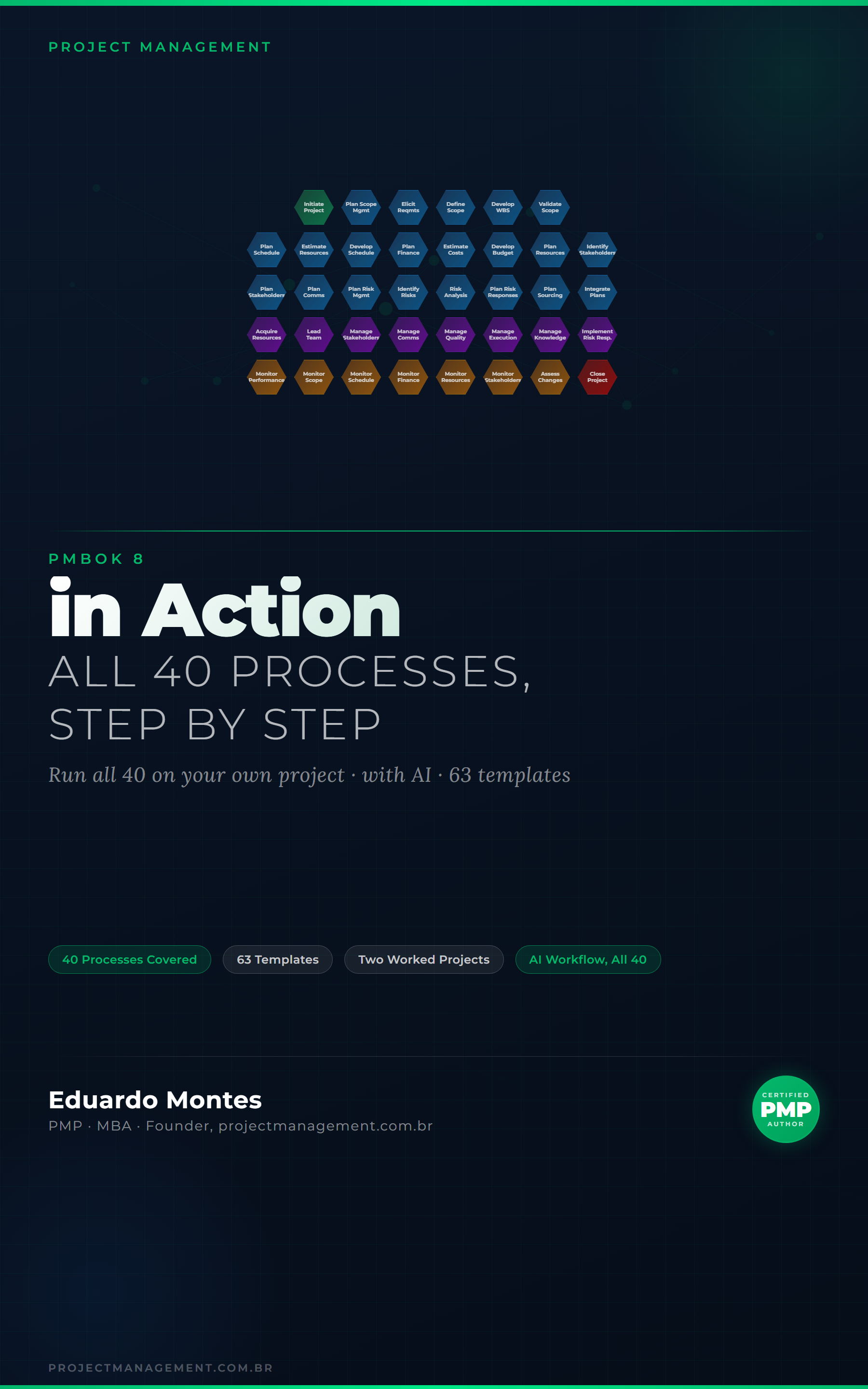
PMBOK 8 in Action
The 40 processes of the PMBOK 8 Guide applied to one real project, with the finished artefact at every step.
See the book — US$ 9.98 →
 Project Management